I, Joy Kirr, am a middle school teacher, author, and speaker. My 7th grade ELA (English Language Arts) classes are working to improve their lives through student-directed learning - without marks throughout the year. This is a log of my learning experiences... Want to have me speak with your staff or facilitate a workshop? Here is my PORTFOLIO.
Showing posts with label engagement. Show all posts

Tuesday, December 1, 2015

Create Your Own Class

EDITED POST 9/3/18...


Why not try it today? We hadn't done any "creative" work since Halloween. The kids were ready to try it with me.

Here's how it went...
     I can finally say this - EVERY student was engaged in this activity. I don't know if I've ever had a day where EVERY student wanted to participate with such... gumption!
     Students had three choices, and could choose more than one idea -
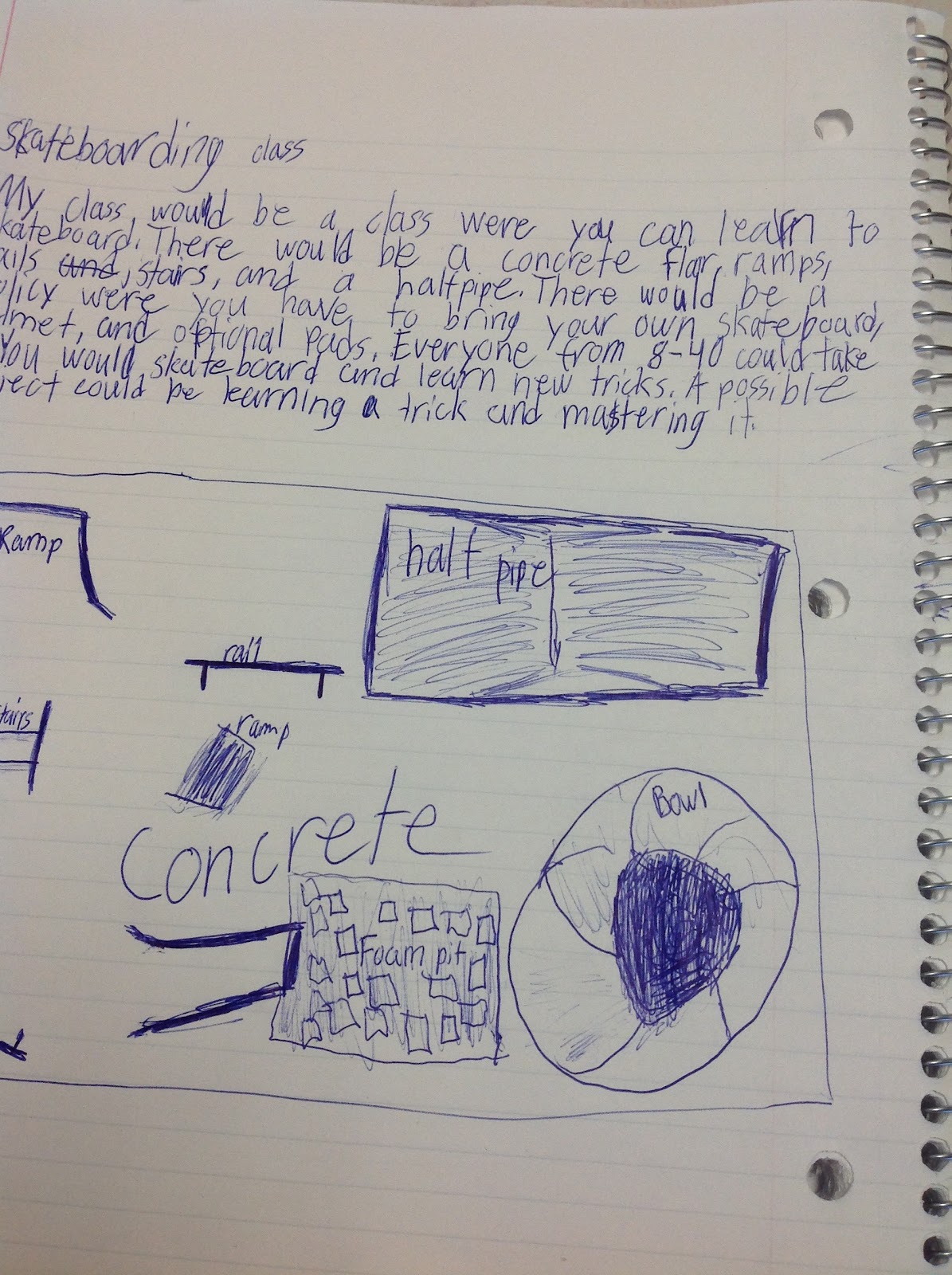
          1) Create a class, writing about the questions John asked in the video. 
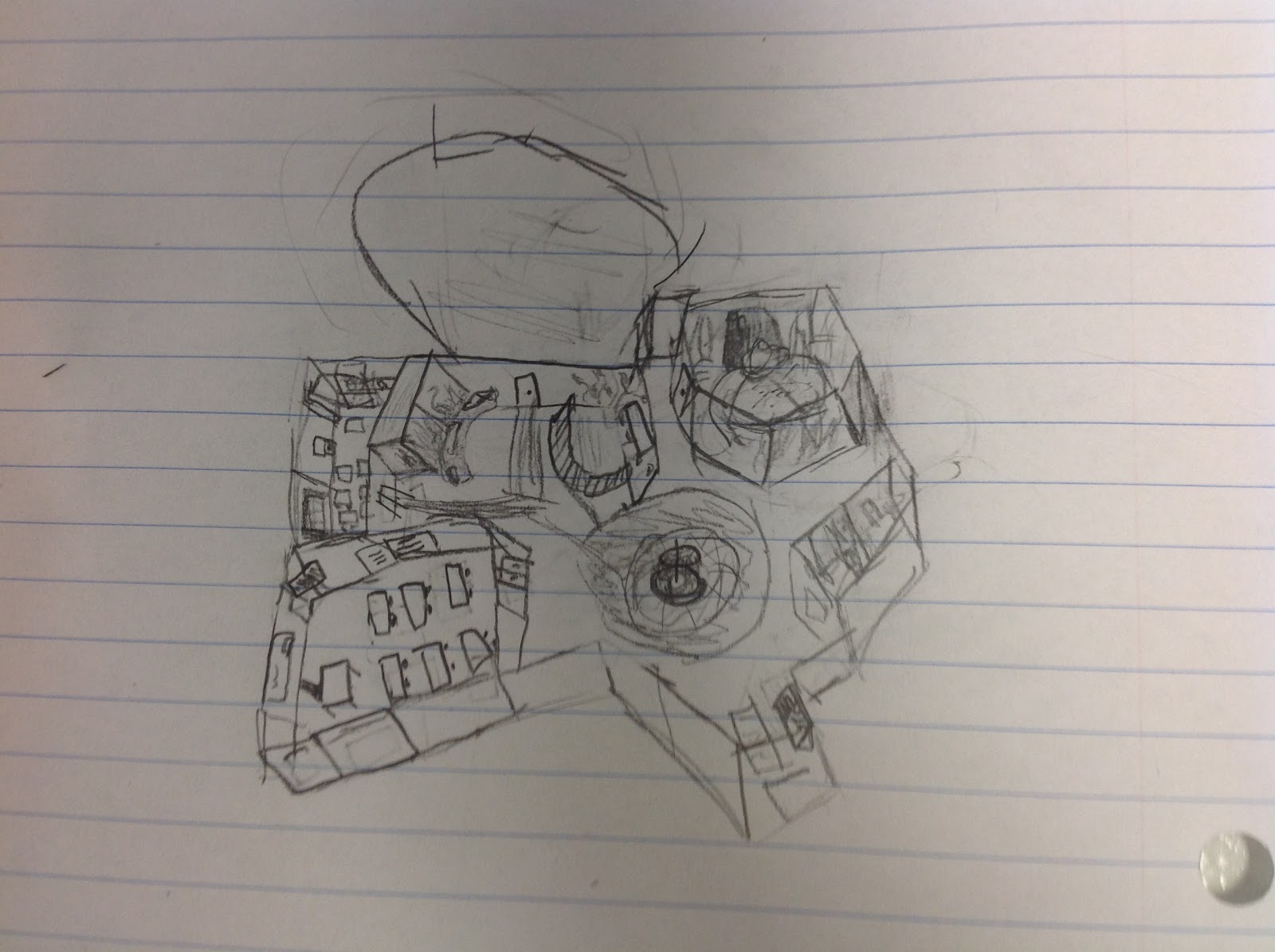
          2) Create a map/layout of the class, with furniture, materials, decorations, etc., including the questions John asked in the video.
          3) Write a proposal for this class, convincing school administration to start this class.
     Students could work by themselves, with a partner, of a group or three.
     They had no budget - they could purchase or access anything.
     There were so many ideas shared and appreciated.
     My last class experimented with Explain Everything (instead of the whiteboard tables or paper) and projecting it to the class computer using Air Server. (So the iPads we had for the tech that didn't work were still used in a great way!)

Some great quotes we overheard (and could take some time to save...):
You can work on the first floor, and I’ll work on the loft.
We’re having a hobbies room.

Let’s make a Pinterest corner!

We’re going to work on our own first, and then collaborate.

You have to grow a mustache to go in that room.
We need an invention room.
Our map is done!
Oooh! Erase that - I have an idea.
I’m so gullible! My friend made me think there was a live chicken running down the street.
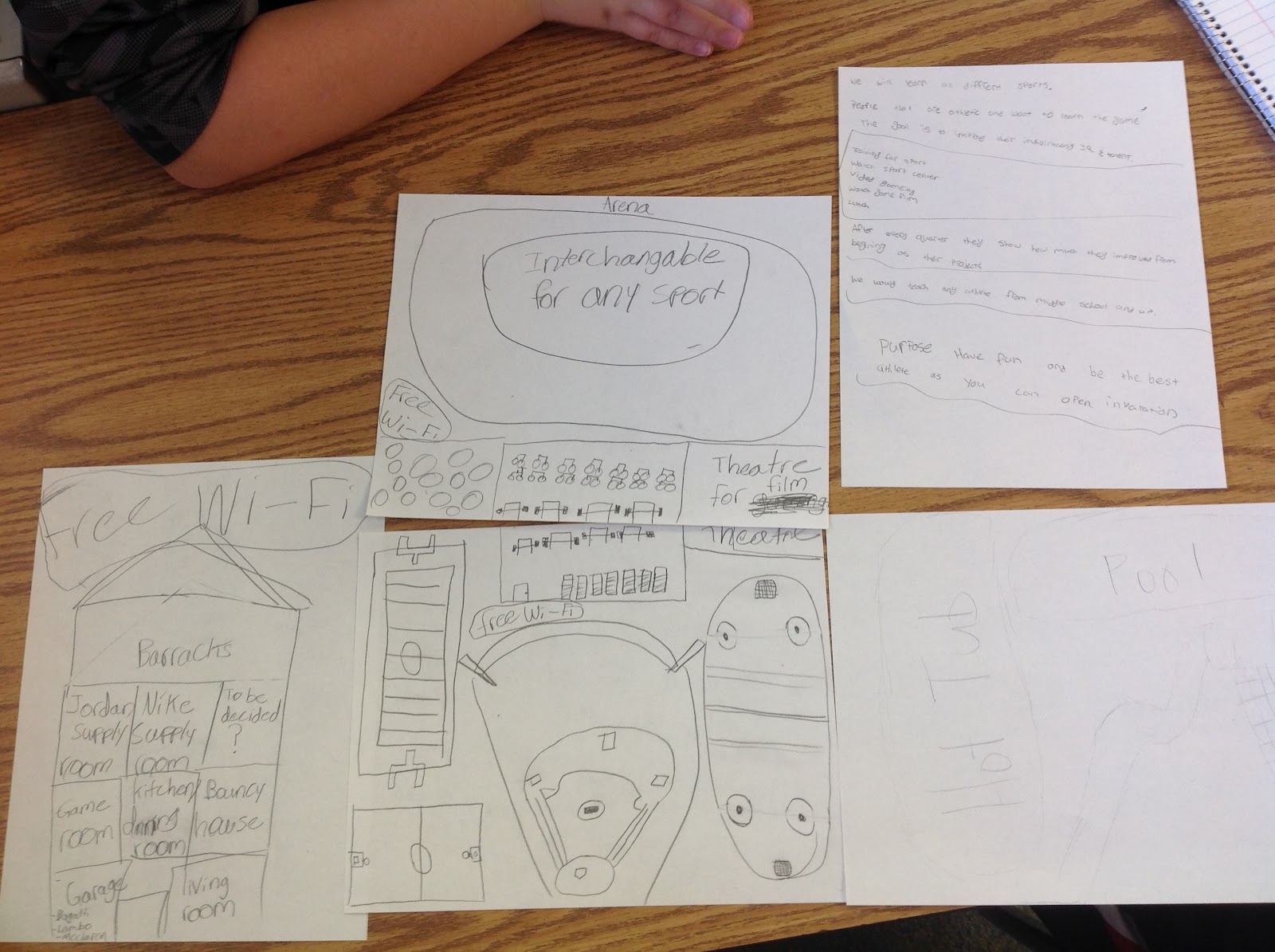
This is going to be the arena.
There’s a self-defense class for the kangaroos (in Australia).
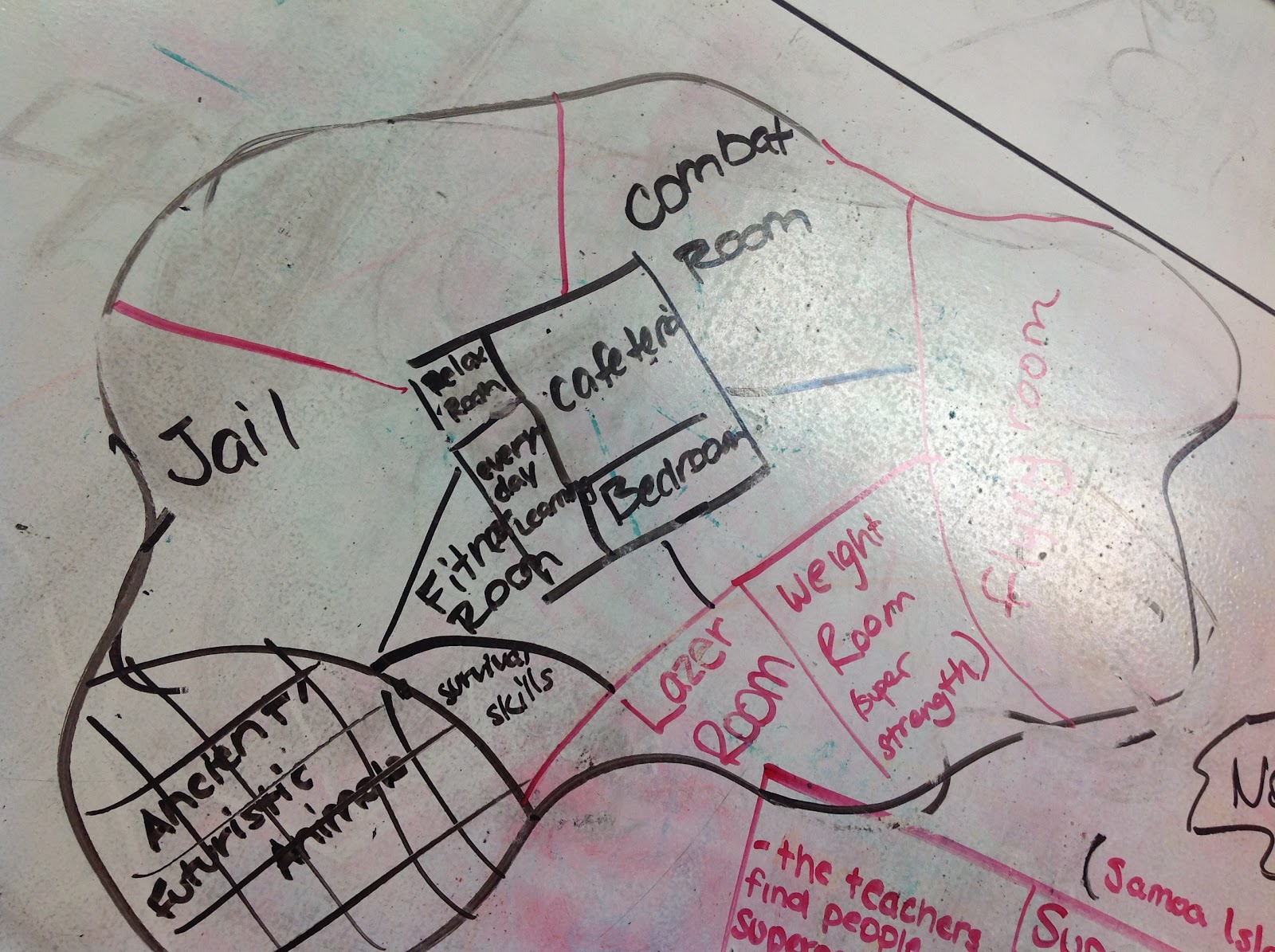
This is for kids that have superpowers that can’t control them. (On the Samoan Islands.)
This is so awesome.
We need something else here.
Oooh! It's 3D! That's cool!
Making hammocks and starting fires… Survival skills!
You can pet a snake!
Check out the pets from different habitats.
There needs to be a front entrance.
Our main goal is to help everyone appreciate what's around them in nature.
I want the class to be about what we actually NEED to know in life.

Kids "ooohed" when they saw this 3D version.
Elaborate school for sports enthusiasts
He said he'd bring in experts to help instruct, as well.
This next one is for those "kids who just can't control their super powers..." This is the school on the Samoan Islands... More was added later, and you can't see it because of the glare, but the "flying room" is on the right.

Additional highlights...
Our normally very quiet girls explained their nature environment with such verve and volume!
One student created her classroom on a website that made it 3-dimensional!
A couple of groups were empathetic and really thought of others in their plans.
When students share their ideas, we all win.
Of course, none of this was graded.

Update 12/7/15 - Carla Dunavan created a Google presentation to help her students with this idea!

Saturday, August 22, 2015

#1st5Days Scavenger Hunt

I've been wanting to do a QR code scavenger hunt with my students for a few years now. We had an "extra" few days before school started this year, so I had some time to create! My original inspiration came from The Daring Librarian...!

My Goals:
--Classroom procedures shared in an engaging way
--Students moving around the room, searching, reading, listening, discussing, learning
--Easily accessible information for students who join in the middle of the year
--Information presented in different ways (video, audio, pictures, reading)
--Student practice with iPads we can check out and use
--End result: Students will learn and the bulletin board will be full (fingers crossed)
Materials Needed:
Handout

--Pairs of students w/split headphones when possible
--Double-sided copy of a hand out (here is mine) for each pair of students (next year I hope to go paperless!)
--QR scan app for each pair of students
--QR codes (for your lessons - here are mine) around the room, near the objects they describe
--An activity for students to do when they are finished. Mine is embedded into the hunt.
--Patience and time
How I imagined it would go:
I hope students will be searching for QR codes, reading, listening, and viewing our processes for the room. They have the handout as somewhat of a guide - they will be able to slowly fill it in once they access each site. I love that the handout isn't in any order, and that they blanks can be filled in differently, depending on what students got out of the (very) mini-lessons. I also hope to see students getting to work on our bulletin board decorations for Parent Night on their own.

How it actually went:
Overall, I believe it went well. We had some snafus, such as the fact that students didn't know their Google passwords had been changed, and needed to come to me to find them if they wanted to use some of the documents. I collected reflections from the two days of school, and one student actually wrote "I did not enjoy the scavenger hunt. I could barely find any of the questions." Oh, so good to know! I realized more and more as the day went on that the sheet provided was "all over the place" and students really couldn't find what they had to fill in. I'll need to change this so they are not as frustrated. Other students, however, wrote that they enjoyed it. "I like the scavenger hunt because it lets you learn about the class." "I thought today's lesson was challenging but fun, and how I like LA to be." I also received a mixed message... "I do not know what ELA will be like unless it is always easy like today. Then I won't like it."
Sometimes we stood on chairs...
There was a lot of looking down...
And many random pairs of students who didn't know each other...

Hints:
--Use a URL shortener before you put it into the QR code generator. It will make your QR codes easier to read. I used the Chrome extension goo.gl URL shortener.
--I used QR Stuff for my QR code generator. I downloaded each pic, and saved them in my Google Drive.
--Explore the various tech you can use - modeling for students! I used my favorite tech spreadsheet (that I also share w/students) and various apps to make the QR codes go to different places. I also added in a fun ChatterPix video (a first for me)!
--Don't wait until the last minute to do this... It took a lot of planning, creating, and organizing.
--Don't think for one moment this will be a permanent lesson you can laminate and use every year - if you're a teacher who is learning from other teachers on Twitter, you KNOW things will be different in the classroom next year! ;)
I'm looking forward to seeing the students learn how they can run our class in room 239!

Sunday, June 28, 2015

Genius Hour - Year 3 Reflection

Was this really only the third full year I've experimented with Genius Hour in 7th grade ELA?

Well, I'll just say it up front - this was my toughest year when it comes to Genius Hour. This post will not have the depth the last two year's posts have had (year one part one, year one part two, year two), as I am EXHAUSTED. This focus will be primarily on the presentations, as that is where most of the change occurred. Note: Mrs. Rehberger is my co-teacher for one class, and Mr. Slowinski is the other ELA teacher on our team.

What I think went well...
   * Mrs. Rehberger stuck with us through it all. It was tough for her, as it was her first experience in the classroom with Genius Hour.
   * One class had a Skype visit with Julie Haden's kiddos, and certain students shared their projects.
   * One class had Grammie visit the last two months on a consistent basis.
   * All classes worked harder when Jen Vincent and Drew Gollias visited and asked questions.
   * Students appreciated being able to change projects when theirs wasn't working out for them.
My student's first concert!
   * I really got to know one of my students and attend her first concert! I was also put in charge of staying the entire time to video record and take photos, since her mom could not stay...
   * Vimily was a great tool to use for students to advertise their presentations - thank you for your examples and guidance, Paul Bogush!
   * Mr. Slowinski and I did not need to sit through (or put the kids through) four straight days of presentations. Instead, we had a full day of presentations throughout the school on the third-to-last day - again, thanks to Paul Bogush.
   * I have great plans for if we ever want to present in this manner again. (I actually have plans for a substitute, should we need one again!)
   * Two parents thanked me for doing this type of activity in ELA class. One even asked who brought this idea to the school. I was very proud to say it was ME! I am prouder yet that we now have our five 7th grade ELA teachers doing this, and one 8th grade science teacher! We are able to share our struggles and celebrations with each other.
   * We had a variety of projects once again, ranging from drawing to making a business.
   * We even had dogs visit (outside) and show the tricks they were taught!
  

What still bothers me...
   * I still had that one student who did nothing. This is one too many. Even with two teachers in the room, he fooled us all, up until the last moment. I asked him to present to me only, and then tried to explain the importance of effort and honesty and making the most of your time in life. I begged, cried, put on my "teacher face," and tried to get my message across. Kudos to him for keeping eye contact with me the entire time.
   * One of our team teachers took the day off when students were presenting. (This made me sad that this teacher did not want to see our students share their ideas.) This means the substitute had a group of boys at one point who walked all over her and the presenters. (This angered me - I would think they would know how to act.) I only know this because of a parent email sent to our principal.
   * Sadly, Mr. Slowinski and I needed to prep the students better for what type of questions (as an audience member) are appropriate and which are not.
   * I never got to see _______'s (insert MANY of my students' names here) presentation.
   * I never got to see the "Packages for Patients" presentation that five of Mr. Slowinski's students put together.
   * It took me 3.5 hours to set up the original schedule, and I had help from my sister-in-law.
   * It took me over twelve hours to schedule the rest of the students as audience members.
   * It took too, too long to set up this one day and help teachers feel comfortable with it.

Changes I'm considering for next year...
   * Mr. Slowinski and I have discussed separating each quarter into something different. First quarter, I'd like for students to MAKE something, culminating with the Cardboard Challenge. We can then have a "teach your talent" quarter, where students share their "genius," and work on presentation skills. Third quarter can have more of a research focus.
   * More photos. More sharing between classes. More posting on the bulletin board what we are doing. I feel like I need a publicist for Mondays! It may just be a new job I create for students...
   * As for presentations, I think we should have them in our classes, during the last four weeks or so of Genius Hour. The presentations that students think are "worthy of the world" will go on and present at the end of the year in some fashion. It would be great if we could have an hour or so on one of the last days to share these amazing presentations, while inviting the community.
   * Getting more parents involved. Having visitors really helped students step up their game. They also loved the one-on-one attention.

Sunday, April 12, 2015

It's Not Perfect

Elisa Waingort left a comment recently on one of my blog posts...
Recently I have been feeling disheartened at what I see during Genius Hour with my students. I feel that all they want to do is to use their Genius Hour time to socialize with their friends at the same time that they pretend to be doing something important. I have been trying out different tools to help them reflect on their projects and to get them to elevate their purposes for what they're doing. I'm not looking for a cure for cancer. I am looking for some thought and genuine interest in what they're doing.   
~comment abstract from Elisa Waingort
I've been there.

I'll bet LOTS of us trying Genius Hour have been there. We don't see much of it on the Twitter hashtag, but that may be because most of us don't share our failures (yes, I see us not being able to motivate kids as OUR failures even though there are so many influences...). Most of us share our successes and celebrations.

This "apathy" towards projects happens with an average of one-two students in each of my classes. What factors might contribute to this?
          - Never been asked to do anything like this in prior school years
          - Driven by grades, and this is not graded
          - No authentic audience to share their work with (yet)
          - Parents are not very involved
          - Can't find that one thing that he/she really wants to pursue
          - Isn't really in to any type of activity at home outside of school
          - Laziness / Would rather sleep

A few of us had this discussion just last June due to this reflection by one of my students in January of last school year.
Published with Student Permission

In fact, I created a new tab on the LiveBinder just because we DO have students who struggle (or should be struggling instead of what I think of as "wasting precious time"). #20time guru Kevin Brookhouser says "mixed success" during 20% Time is "pretty typical" in this impromptu Google Hangout. A.J. Juliani suggests we help students find a new purpose in this blog post about when Genius Hour fails. Karl Lindgren-Streicher writes about those "do nothings" and "The Suck" during your Genius Hour / 20% time. We've been there. I have strong doubts when I hear a teacher say that EVERY single student is engaged during this time.

I have a tendency to think of this type of student as a "slacker." I try not to label my students in any way ("He is ACTING like a slacker right now"), but this word keeps popping up for students who are not motivated to choose something to do/study and stick with it. My brain shouts, "This is supposed to be what YOU WANT TO DO! YOU are the reason we are trying this in class! It's for KIDS LIKE YOU!"
How I often feel... Photo by Joy Kirr.

Frustration mounts, and I try various tactics...
          - Have the student fill in these sheets to see what you like, and we'll conference afterwards
          - Have the student try out these websites, and we'll conference after they've tried a few
          - Have the student document what everyone else in class is doing and create a movie/advertisement to share
          - Have the student read through other student ideas and choose from there
          - Ask the student - what can we do about this?
          - Have the student reflect/document each week on what they did during this hour - if this still doesn't work, I attach a GRADE to it (against everything I've learned)
          - Have the student research "Why Genius Hour-type learning does NOT work for me"
          - When we get to fourth quarter, the threat of presenting in front of peers, teachers, and parents usually spurs on SOME type of project.

I feel that, although I am very calm with these one to two students in each class, they should be able to see the smoke coming out of my ears. I am THAT frustrated.

I agree with Elisa...
I'm having lots of second thoughts about Genius Hour. Phew! There! I said it.
I question what I'm doing EVERY SINGLE WEEK. Change which comes from some serious reflection helps make our classes better.

That being said, we've all got some students with great projects. Maybe our students aren't curing cancer, but many - no, I believe MOST - are doing what they LOVE to do, or trying many different projects to see what they think they might like to do. They are using this time to explore, plan, collaborate, create, make decisions, write, read, fail, and share.

Compare your students to adults you know. Some are very motivated self-starters. Others... are not. Some know what they want to do in life, and some are still struggling - big time. Some have the "go get 'em" attitude, and others don't mind sitting on their fannies and letting life come to them.

I will NOT give up on students who, during Genius Hour, act apathetic. These are often students who act the same way in "regular" lessons, but sometimes not. Sometimes these students just don't know what to do, and have a difficult time making decisions. I will not give up, because I believe it is our role to keep encouraging, keep challenging, keep modeling what perseverance looks like, if nothing else. If they learn one lesson from this struggle, it is that when I believe in something, I believe in in whole-heartedly. I believe if young people become self-directed learners and know HOW to learn, they can have the world in the palm of their hands.
There will also be people who cannot stand the happy mascot, and others who LOVE him (her)!


Saturday, December 13, 2014

Friday, June 27, 2014

Rules

I've taken the liberty of capitalizing beginnings of tweets, completing words, and adding ending punctuation on this conversation via Twitter four days ago...

"Not a fan of genius hour or other schemes to justify rest of the school day being laborious or irrelevant" -Gary Stager, Ph.D.
"The word 'scheme' hit me hard. #Geniushour affects 100% of the week" sent with an attachment to the link to a blog post where I defend Genius Hour. -me
"Why call it an hour then?" -Stager
"Don't think the name matters. Isn't it about kids thinking and building a passion for learning?" -Kathy Turley
"Of course the name matters. Words matter." -Stager
"Words DO matter. I'm fortunate I have 1hr/wk that changes the other 4hrs students & I have together." -me
"Don't care about Dan Pink. Why not read Dewey, Hawkins, Kohl, Meier, Littky, a Papert, Malaguzzi?" -Steger
"They all have something to offer. Everyone has their favorites doesn't mean 'Pink* is wrong.'" -Ihor Charischak
"Pink makes up stuff and spreads junk science. He's wrong." -Steger
"Have read most of those but why not package it for people. G.H. is one way to use what they say." -Jarrod Lamshed
"The challenge with packaging GH = it becomes consumable & discarded and when the package is discarded, the underlying principles often go along with it." -Dave Quinn
     * Pink = Daniel Pink, author of Drive (one book some teachers link to Genius Hour)

And I'm in a sour mood for the next two days...
I don't get it. Why not support something that COULD POSSIBLY BE one way teachers can BEGIN the process of letting students take over their own learning? Does it matter what you read that gives you idea of letting students ENJOY school while taking ownership of their learning? Does it matter that people may be "packaging" it, but they like at least a portion of what they're seeing from students - and it's more choice than their students have ever had? Heaven forbid it changes the rest of their week with students, or maybe their outlook during future years! Harrumph.

Skip two more days...

Holland Michigan - where my love and I would rendezvous and eventually get married! We visited on our three-year anniversary this year to unplug, relax, and enjoy the water. One of our stops: Kirk Park

Here - they have rules, warnings, and guidelines... .......All    the    way    to    the    beach.


Some people can look at them and think... this park will be no fun. I won't be able to do ANYthing. And then... they get to the beach...see and hear the waves...feel the sand between their toes...

It got me thinking about all the rules teachers and students have. A quick overview of a student's morning at my middle school:
     Rule 1: No biking or skateboarding on school property.
     Rule 2: No throwing snow on school property.
     Rule 3: When you walk in the door, no hats allowed.
     Rule 4: Turn off any devices and leave them (and your jacket) in your locker; get to homeroom.
     Rule 5: Sit in your seat and be quiet while we listen to announcements.
     Rule 6: Stand for the pledge of allegiance.

Phew! And that's all in the first ten minutes of a student's day!

What about teachers? I have at least two rules imposed on me:
     Rule 1: Create and maintain a safe environment where children can learn.
     Rule 2: Cover curriculum.

Some people will look at student and teacher rules and think... this is so hard on the students... no BYOT... maybe scripted curriculum... how can they cover all that curriculum in one year... students won't be able to do ANYthing fun. And then... they visit the classrooms... see and hear student engagement in various ways... see curriculum being covered and (GASP!) students smiling...

What are school rules for?
     SAFETY
     RESPECT for learning

Would anyone doubt this? If I don't like the rules I have to teach by, I could leave. The facts are, however, the reason for the rules makes sense. I like my school. I even like to follow rules. I don't like to make waves. I will work my hardest at covering the curriculum in the few hours I have with my seventh graders. I will work with other teachers as to how this can best be accomplished. I will try to keep my students having FUN while learning the curriculum. AND... I will also have one hour of my five hours with children where they can pursue their own learning.

I am currently not in a position to change my entire school or my entire district. Nor do I have the drive or energy to do so. I do not even pretend to have the knowledge of HOW to do so. How many teachers are like me? How many want to begin to change students' lives by making a difference in his or her own class? If so, it cannot hurt to try something similar to Genius Hour. And if you don't like the name, by all means - change it. Here is a list of some other names, or create your own. I've defended the name I use here. The whole point of this type of learning --> to engage students, to help them imagine and then express their creativity, to help them discover their passions, and to encourage them to use their own genius to make a difference in their world. I just cannot sit back and watch as some teachers trash good ideas - just because it may not be possible for some 100% of the time.

Compare class to the beach. Even with all these rules, I found time to swim in the water, play frisbee, build a sand castle, splash around, and even read my "assigned" summer reading book...

If you want to work in a building or district in which the "genius hour" or "20 percent time" philosophy IS truly 100% of the time, try one of these schools. If you want to stay where you are and make a difference in your own classroom, try - at every opportunity - to give your students choice in HOW they learn your curriculum, and choice in WHAT they learn. Then please share with the world what you are doing in your classroom that is making a difference. It doesn't have to be ALL or NOTHING. Some people have a hard time starting small. I won't be knocking them for trying - I'll be supporting them all I can.

Saturday, June 7, 2014

Genius Hour Year Two - Reflection

I'm a numbers person. 
I like to see graphs and charts. 
I always wonder... 
     Can you quantify what happened during Genius Hour this year? 
     How??

I did this same reflection with numbers last year (see this post), and had to crunch the numbers once again. Our second full year under our belts, I decided to just focus on fourth quarter for this reflection. Of course, more changes are coming for next year, but fourth quarter was "true" Genius Hour - I let students read, research, create... it was up to them.

I'll just get right into the number crunching I did. Keep in mind that I had 64 students participating. Let's start with presentations. Our presentations for which I had permission to publish are located here on our class Weebly.

Presentation Quality
  Last year, we did not focus on presentation quality. This year, I gave three mini-lessons on presenting. One was regarding visuals, one regarding audio, and one regarding body language. I still didn't want to over-analyze, so I quickly went down the list of students and gave the first "grade" that came to mind:
  0 = not good    
  S = solid          
  * = stellar
 
2013 Stats


Anyone interested in what school subjects students learned about? I was...
I didn't know where a couple of these fit in... Video games? Designing with Minecraft? DIY (Do-it-Yourself)? So they have their own category. (Some DIY projects could have been classified as science, some as family & consumer science, some as art...) I'm so glad more this year are geared toward reading and writing - I think that happened because I started with Erin Olson's idea of Read, Be Inspired, and Act on It (or Do Something Inspiring)...

2013 Stats


Just how productive were students during class time? If I'm using 20% of our class time for students to learn what THEY want to learn, this had better be productive... Here are the questions I asked myself:
Did students work on their project during this hour every week?
  0 = no               S = somewhat       * yes
If they did not work on their project in class, did they read or were they productive in some other way?
  N = no                                         Y = yes
I put these two together to see student engagement in class...

2013 Stats


Then I considered...
What about a "typical" day in LA class? What is student engagement like then?  If the numbers are low, it could be a mixture of things... My passion for the content, techniques I use to keep students interested, student preferences for content, student emotions, family life, etc. etc. etc... I could go on and on about student engagement in a middle-school classroom, but I still had to measure it to make any sort of comparison.  This year's "typical" reading and writing day was a tough one, but there were still days during which I lecture, then facilitate, then students do independent work. What does student engagement in this setting look like?
I decided to measure student engagement in typical lessons in this fashion:
  0 = does not know where we are in the lesson
  S = can participate if called upon
  * = participates without prompting


2013 Stats

Let's put the two side by side...
Genius Hour In-Class Engagement                   Engagement in Typical Lessons


Which would you rather have? In which setting would you rather be? The latest talk I've listened to that has really focused on why students need to be engaged in lessons is this one by Brandon Busteed. This is a 35 minute speech that was tweeted out by Denise Krebs over a year ago. This is what I've come to realize - It's all about student engagement, and letting students know you care about them. In this video, he says that from the last Gallop poll, only 61% of middle-school students are engaged during lessons.  I truly feel that all parents, teachers, and administrators need to hear this talk. Please take the time to listen to him - I cannot sum it up here, as there is so much he says that is vital to our students' education.

Speaking of student engagement...
Another number I wanted was student engagement outside of the school hours.
Is there evidence of work at home?
  0 = no               S = somewhat   * yes

These numbers are very different from last year. This could mean many things. For me, at least, a good take-away is that it meant more students were engaged during class time, and this helped things run smoother for me this year. Classes did seem to be more chaotic (loud, messy, where is so-and-so?), but I wasn't keeping everyone on track as much as I had to last year.

I wish we could have collaborated with other students, and two other students from across the world wanted to collaborate on a music project! Unfortunately, that's when one of my students decided to create the band, instead of going alone on her project.

Tyler & Matt's LFL
This year, however, we have two new changes - I was able to get a mentor for our nine novelists, and three groups of students ("Play It In Reverse" band, Little Free Library, & Which shoe is best?) reached out to the community for help! One teacher from a local district, Christopher Bronke, wanted to mentor, but the two students that would thrive under his mentorship never jumped at the chance (and I KEPT bugging them!). Bonus for us (as I didn't push this): we had six students from my classes who have made a difference in someone else's life. A Little Free Library was created, books were collected and sent to children's hospitals, money was collected for water in Africa, and hand-made goods were sold to collect for a greenhouse for our school garden.

Our classes were also featured in two online articles this year - CNN Schools did a story about Genius Hour (check out the sixth photo), & Imagination Foundation picked up our story about why we do the Cardboard Challenge in preparation for Genius Hour.

One more thing - I need to share a quote from a student who was NOT engaged during class time. He wrote this in his reflection: "Genius Hour was my favorite bc it felt like I had freedom in school." Another wrote, "I liked Genius Hour because we got our own time to do something we liked." No kidding.

Please tell me in the comments... What else could I try to measure for this reflection? What do these graphs tell you? What's the next step?
Wordle made from students' one-word reflections

2013 Wordle made from students' one-word reflections...


All graphs were created at this easy-to-use website: Kids' Zone Create-A-Graph

Sunday, March 23, 2014

What's the value in Frozen Marbles?

A respected Twitter colleague of mine wrote a post last week titled, “Be Careful of Genius Hour.” As soon as I read it, I realized that the comments section wasn't the place for my thoughts on this close-to-my-heart subject...

If I could put Laura’s post into a question, it might be “During Genius Hour time, are students learning something valuable?” This has been asked before, in a different way, in Denise  Krebs’ post here - “Must the Students?” - Must the students be able to explain why their project is worth learning? (Check out the comments on that one - and add your own!) I love that this question is still being asked, as it is one that many teachers, parents, and administration ask. Let’s keep this conversation going.

I sometimes think some of my students' projects are not "valuable." However, here is where I find the value in doing something such as baking brownies (which, for us, is done at home) or playing Minecraft...


Collaboration, cooperation, social skills… if they are working with friends
  • Getting prepared
  • Following directions
  • Perseverance / Stamina / Determination
  • Follow through (cleaning up, whether they succeeded or failed)
  • Doing what they love and being proud to share that with others
How to make baking brownies “more valuable...” Ask this student
...to try 4 different recipes, and create one of his/her own
...to have a taste test with 5 different recipes, one being his or her own
...to learn how to decorate the brownies in various ways
...to learn how to shape the brownies so it makes a design
...to make brownies to sell for a specific purpose/charity
...to start a blog with dessert recipes he/she has tried and modified


How to make playing Minecraft “more valuable…” Ask this student
...to build something to scale - such as their school or a monument in town
...to add to their 3D model something new that isn’t in the original - something they think should be there (something to make this place even better)
...to create a tutorial on how to build in Minecraft
...to create a video when they are finished with one aspect, to show what they are learning along the way
...to ask other students what they’d like to see from a Minecraft project (I have a student who is making a roller coaster quiz game in Minecraft - if you get an answer wrong, you get ejected! I have no clue how he’s doing this…!)


ALWAYS ALWAYS ask, “How could you have done better?” and “What would you change if there was a ‘next time?’” and “How have you grown with this experience?” or “How will this experience help you in life?” I believe the reflection piece is necessary for more learning to occur the next time. I have students fill out this reflection form (adapted from Denise Krebs’ form on the wiki) every time they share what they’ve done / learned with the class. Not every project is something I would deem “valuable.” I’m not in seventh grade either.  I like coming to school. I find time to do what I love there and at home. Do your students?


Any project can be a learning experience. It may not be up to par with what we think constitutes valuable class time, but ask yourself this…
  • Is the student engaged?
  • Does the student feel like he matters?
  • Does the student want to come back to school the next day?
  • And something that helps with the rest of your week: Do you know your student better?
Here’s a photo from the latest quick presentation from a student of mine… “Frozen Marbles” she called it. She filled up balloons with water and froze them on a tray in the freezer at school. The next week, she and her friends peeled the balloons off of the ice. Here is the result:


She was intrigued by the design inside of the ice. She wondered what she could DO with the frozen marbles. Where is she going next? She’s going to try a bunch of quick experiments and video tape them. Her final presentation will be a video of all she has tried, including their successes and failures, and what she's learned. Is this valuable? She’s engaged in learning - on her own. When she presented her findings on this tiny project, the rest of the class was rapt, making her feel important. She wants to keep learning, and to try more difficult experiments. I get to learn more and more about her each week.


I obviously don’t have all the answers. I'm still learning, along with my students. Please, let’s keep this conversation going so we can help each other help our students become life-long learners...

Sunday, February 23, 2014

Fishbowl Discussions

We should have started these types of discussions back in September or October, but I'm so very glad we're starting now. I needed to get my reflections down on how "fishbowl discussions" went in my 7th grade ELA classes this week. Why are we trying these? Because the 7th grade ELA team of teachers knows that to get students doing most of the work is how they learn. We want to keep them engaged in the lesson by being able to share their ideas, and we want to help them be able to listen to and learn from one another.

Day 1:  I began by asking, "What are the components of a good discussion?" I then asked WHY we have discussions. Their answers were as follows: To figure out answers to questions, to practice listening, to get other's viewpoints, to learn something new, to share what we know.
     Next, we watched the first 6 minutes of Paul Bogush's fishbowl discussion video. Students asked, "Are we going to do this?" Yup! We then practiced moving the tables and chairs - I feel that since I pointed it out during the video that they would be moving their own tables, they rose to the challenge. Since I wanted an easy discussion first, we read a scenario* (here are some we may use in the future), and asked for our first volunteers. Reviewed "rules," and started discussing. I kept notes on who talked, and who chose to stay in the background. With 7-10 minutes left to spare, we moved the tables and chairs back and I asked students to suggest how to incorporate more people into the discussion.


Student suggestions -
     * When you're done speaking, you can get out of the discussion without someone being waiting to come in. That way there's an open invitation of an empty seat.
     * You can join just to ask one question if you'd like.
     * You can encourage someone to come in for you - make a suggestion to someone.
     * You can give your question or idea to a friend and he or she can come in for you.

My observations -
     * I love how my three classes moved the tables differently. I gave my first class too many directions, I realized, after my second class went right to it without my help. Their middle table formation was different than the first class, and my last class had a different outer circle formation. Let the students to figure it out!
     * My first class (the quiet, compliant class) was still quiet, but they listened well to each other, and responded positively to each other.  One thing they did not do - disagree. It almost seemed as if they were too nice. (Is that possible?) There wasn't much dissension.
     * My second class (the tech-loving, opinion sharing class) was very disappointed to see their discussion end. I heard one student on his way out say, "I like this. We actually have a chance to get a word in." I did notice that a handful were in the fishbowl more often than others, and they started to get frustrated with each other near the end, repeating what they'd said prior.
     * My third class (the after-lunch exuberant class) was the most active - jumping in and out and in and out like a whirlwind! However, it was the same few students throughout, and they didn't respond "bounce ideas off each other" like they said they had listed in their "components of a good discussion."

My changes for the next session -
     * Ask block 3/4 how to get more students involved, and show them how they can nicely disagree.
     * Limit students in block 5/6 to two times in the circle, saying two solid ideas each time.
     * Create small handout of response starters for them to use so they begin listening to each other. (I also put these in the fishbowl for block 5/6.)

Day 2: We have a question of the day in the back of the room. Students' names are on individual magnets, and they move their names over under the answer to the question. This day's question was, "On a scale of 1-10, how well do you think our fishbowl discussion went yesterday?" They answered as they came in.
We then looked at our ideas from the day before so they could see what they did well and on what they could improve, and asked the question again. Each class seemed determined to do better than the first discussion. Students had a few suggestions that they were willing to try, and I was excited to see how each class could improve.
     We first voted on a scenario from two choices. We read, moved the tables and chairs (oh so quickly this time!), and students were in the middle, ready to go. There was an added job today, however. I asked students to take notes on what other students said - anything that surprised them, made them think deeper, etc.
     With 10 minutes left to spare, we moved the tables and chairs back and I asked students to share with me what they wrote down. I projected these quotes on the board, and showed them how we will be using our notes to write about the experience (during tomorrow's scenario). I asked for a quick "thumbs up, middle, or down" as to how well we did today - and celebrated with them their progress.

My observations -
     * Thank goodness for wheels on my tables. Students were quick to figure out what tables go where.
     * The same amount of students participated in my first class, but one was different than yesterday. They also disagreed more often, but still in a respectful way.
     * More students in block 5/6 were able to participate! It seemed as if they were choosing their words carefully, as well, as they didn't want to leave the circle too quickly.
     * My last class made me laugh - they used the response starters to the hilt! They sounded sarcastic, but it did encourage them to listen more to each other. One student pulled out a line from our last huge unit about neuroscience - "How old is he (the "new kid" in the scenario we read)? He's in high school? Well, then we know his brain isn't fully developed yet!" I was cracking up!

My changes for the next session -
     * Make sure students on the outside of the circle are sitting two to a table only. At times there were three, and that seemed to encourage whispers.
     * I will NOT give the class a time limit that they can see - I did this for my last class and it backfired. They stopped talking early, and asked that they not know how many minutes they had until they only had two minutes left. Done.
     * Make sure, for tomorrow, each student is ready to take notes on what their classmates say. This was difficult for many today. I'm glad we tried it with no pressure of a prompt first, and I'm glad I'm not grading their prompt they'll turn in tomorrow.

Day 3: Our question in the back of the room was the same.
We first celebrated what we did well the day before, and then suggested goals for the day. I shared my goal - students taking notes on what their classmates were saying. Before we read today, I asked students to write about success. "What does success mean to you? What does it mean to be successful?" Students had 10 minutes, and wrote a full page on average. We then read Ralph Waldo Emerson's "Success."  Then the discussions began.
     After discussions, I asked students to add to their writing, using the text, comments from their classmates, and their own reflections.  My prompt when they began writing - Explain how the text or the discussion changed their thinking.


Student suggestions -
     * Drop the poem. They wanted to have the discussion based on their writing, not on the poem.
     * One said that if we grade them on their participation, more will go in the middle.
     * My middle class likes the new rule of going in only two times.

My observations -
     * Students wrote (before the discussion) for a long time... some wanted more than 10 minutes.
     * Students were eager to move the tables, and did so very quickly.
     * Two students went into the circle and did not say anything. They were finally tapped out, and did not resist.
     * I found it very hard to not "rein in" my middle class, as they got off topic once (I popped in to say, "Let's remember our focus"), and right before I was ready to pop in again, they came back on topic themselves.
     * When the sub for our teaching assistant asked a question from outside of the circle, the students near him quietly explained that he could "tap in" if he wanted to talk.
     * My last class really focused just on the lines in the poem, and finally got so frustrated with it they asked me if they had to discuss it. I said, "Go ahead and discuss 'success.'"
     * Students who were listening had a lot to write after the discussion. Students who were not in the middle or did not listen had a very difficult time writing more than one or two sentences.

My changes for next session -
     * Let students discuss their own writing first, then add the poem when they've run out of steam.
     * Let students know how many times they've been in a discussion so far (0/3, 1/3, 2/3, 3/3) so they know I'm aware. If they have been in 0/3, give them pointers on the bottom of a note so they feel that they can jump in. (I created this document for now, but can modify later.)
     * Keep asking students to reflect on what went well, and on what they can improve. They're so good at this, and it seems to give them focus when they begin a new session.
     * I've created a self-reflection sheet, as well (which will probably work better than me giving them the notes I wrote about above).
     * Give students a goal of TWO quotes that they will use in their writing after the discussion.
     * Give any substitute the directions for fish bowl discussions. ;-)

Student quotes I wrote down regarding "success" (from all three classes) -
     "...depends on your goal in life."
     "If you are NOT successful, you learn more from failing."
     "It's not what others want you to do; it's different for everyone."
     "...friends, family, and education..."
     "...who you surround yourself with..."
     "If you hate yourself, are you not successful?"
     "It's how you feel about yourself - what makes you happy."
     "It's giving back..."
     "...doing the right thing..."
     "...helping others... bubbling with excitement..."
     "Success is hard work."
     "...if I tried my hardest... be patient..."
     "...persistence - don't be a quitter..."
     "You've succeeded if you have friends that are there for you."
     "Success is something YOU determine."
     "You have to keep elevating it... want to be superior to others..."
     "...make your way up there with smaller goals..."
     "You don't feel like you've successfully completed something if no one knows about it."
     "...as long as you do something that helps others..."
     "You might have to miss out on things..."
     "Do what is important to you."
     "Live in the present."
     "Only you can say that you've succeeded."

Oh, be still my heart. I love it when seventh graders make sense... Scroll down on this page to see some of their writing.

We will continue to add to this writing regarding success - after we read, analyze, and have more discussions regarding the first two chapters of Outliers by Malcom Gladwell.

* We have read two scenarios provided by Michael Smith - co-author of Fresh Takes on Teaching: Literary Elements - He had come to our school to share some great ideas!